
About
Darren Dupont
I grew up in Wynyard, Saskatchewan, like a lot of Canadian kids—dreaming about winning the Stanley Cup. Or the Grey Cup, depending on the season.
I’d strap on my rollerblades, grab a stick and a tennis ball, and play hockey by myself on the street. I’d skate up and down, create the game in my head and call the play-by-play out loud as it happened.
There was always a score. Always a clock. Always some dramatic situation I had invented before coming in on goal.
Looking back, the funny thing is that scoring wasn’t really the best part. Creating the moment was.
I just didn’t know yet that you could make a career out of it.
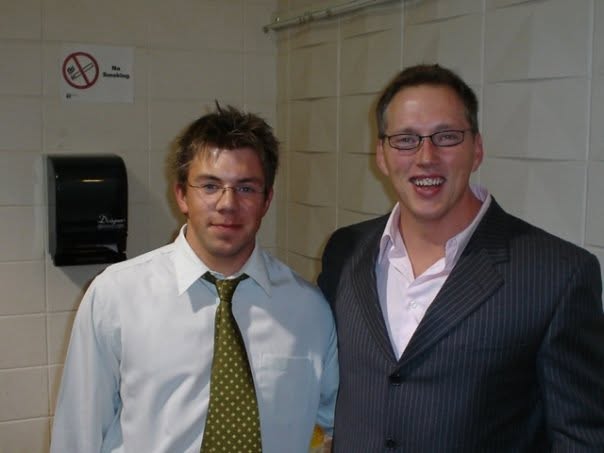
In the fall of 2005, I was at the University of Saskatchewan trying to figure out what that career might be. I was taking classes toward business and education, thinking maybe I’d go into business or become a phys-ed teacher. I was also still playing senior hockey back home in Wynyard.
That season, Darren Dutchyshen came to speak at one of our hockey team’s fundraising banquets.
I’d heard people tell me before, “You have a voice for broadcasting.” But I had no idea broadcasting was something you could actually go to school for. Dutchyshen had attended the Western Academy Broadcasting College — right there in Saskatoon.
I didn’t even know it existed.
I looked it up. Went to an open house. Got accepted.
By Christmas, I’d left university. In February, I started broadcasting school.
The First Call
Coming out of broadcasting school, I had an opportunity to take my first job in the industry. Instead, I chose to keep playing football.
A local Dairy Queen sponsored the team and helped me out with a job while I chased it. But I developed tendinitis in my knees, couldn’t practise, and was cut just before the first preseason game.
Suddenly I had a job at Dairy Queen — and not much of a plan for what came next.
Four days later, my phone rang.
It was my friend Mike, who I’d gone to broadcasting school with. He’d just landed a morning-show job at a new FM station in Kindersley and called to see how football was going.
Not particularly well, as it turned out.
The Kindersley Klippers were looking for a new play-by-play voice.
A week later, I drove to Rosetown to interview with Tia Daniels. I got the job.
That was the start of my broadcasting career.
Finding Television
After a few years in radio and play-by-play, I found myself back in Saskatoon, back at university and still calling games whenever I could.
But I wanted to get into television.
The problem was pretty simple: television jobs required television experience, and I didn’t have any.
So I went to see Bob Baker at Shaw TV.
Bob asked what I had in mind. I suggested maybe we could do something around the University of Saskatchewan Huskies football team. Somehow, that conversation turned into a 30-minute weekly magazine show.
Shaw gave me access to cameras and taught me how to shoot and edit. They let me use the edit suites after hours and even built a set in the studio. I found a couple of co-hosts, went to practices, conducted interviews, cut highlights from the games and put the show together.
I was learning television by making television.
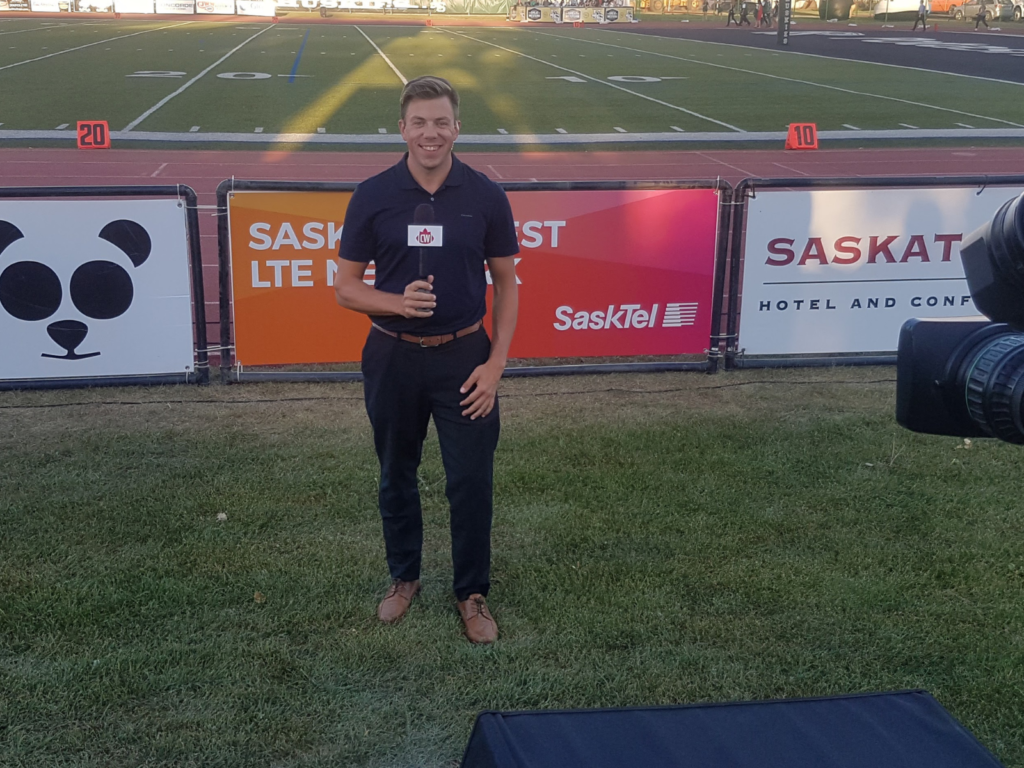
Then Bob called.
The person who normally worked the sidelines for their regional Canada West football broadcasts, wasn’t available for an upcoming Huskies game. Bob had been watching the show and asked if I’d be okay with him putting my name forward.
Would I be okay with it?
Absolutely.
I worked the game. It went well.
Then they asked me back. And they kept asking me back.
Football led to hockey. Sideline reporting led to hosting. Regular-season games led to bigger assignments and championships. Eventually, I got the opportunity I’d been chasing all along:
a seat in the play-by-play booth.
Why play-by-play
I’ve worked as a host, reporter and producer, but play-by-play has always brought me closest to the reason I fell in love with sports in the first place.
I still believe there’s a little bit of magic in a game.
Nobody knows what’s going to happen. The drama isn’t written yet. And the play-by-play broadcaster gets to narrate that story as it unfolds — to provide context, build the moment when it needs building, and sometimes simply get out of the way and let it happen.
There’s a feeling just before a broadcast that reminds me of playing. Sitting on the bench knowing your next shift is coming. Standing in the huddle as a quarterback. The nerves, the anticipation, the belief that something might happen that you’ll remember forever.
I still get that feeling before we go on air.
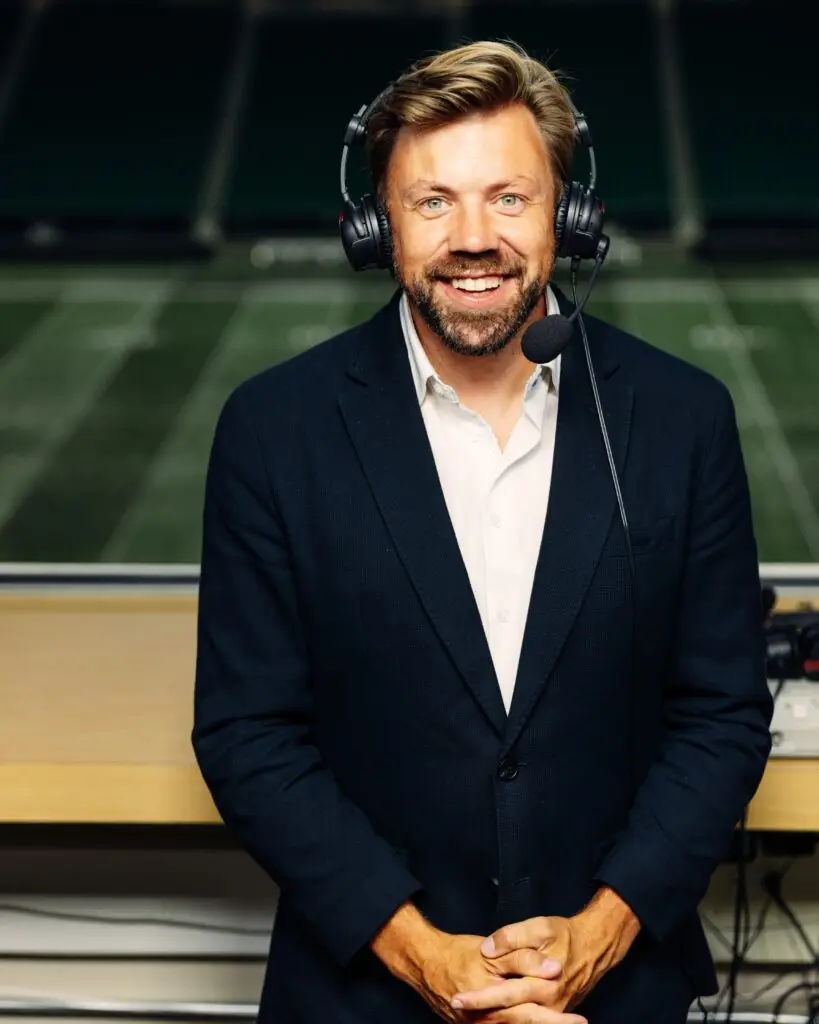
What's Next
This career has taken me across Canada and the United States and into broadcast booths for football, hockey, curling and more. I’ve had the opportunity to call championships, international competition and games involving some incredible athletes and programs.
But I don’t feel finished.
I want the games that matter. I want championships. I want to work alongside great broadcast teams and earn the opportunity to tell the stories of sports and leagues at the highest level.
And after all these years, I still love getting ready for the next one.